Product / Technology
Medical sensing meets autonomous navigation
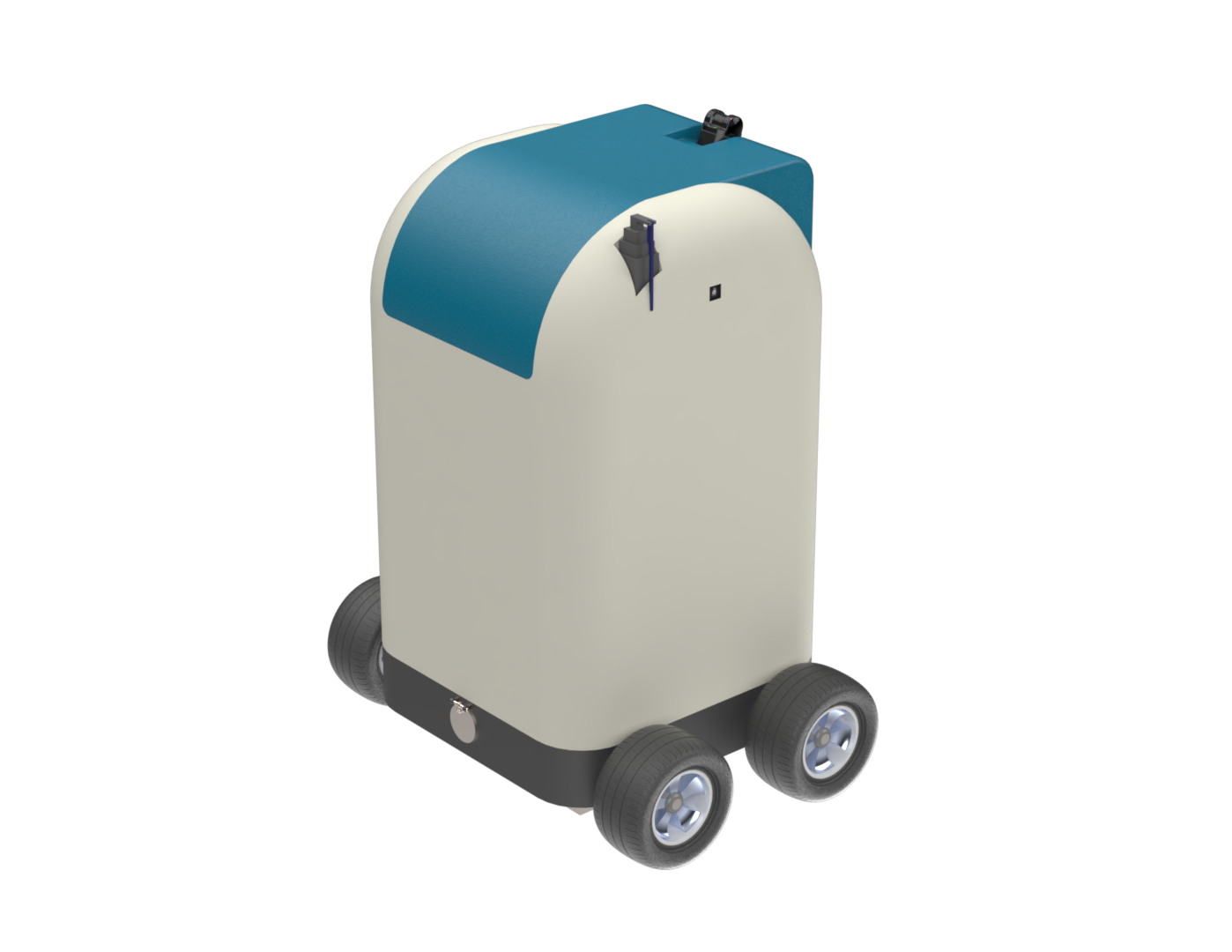
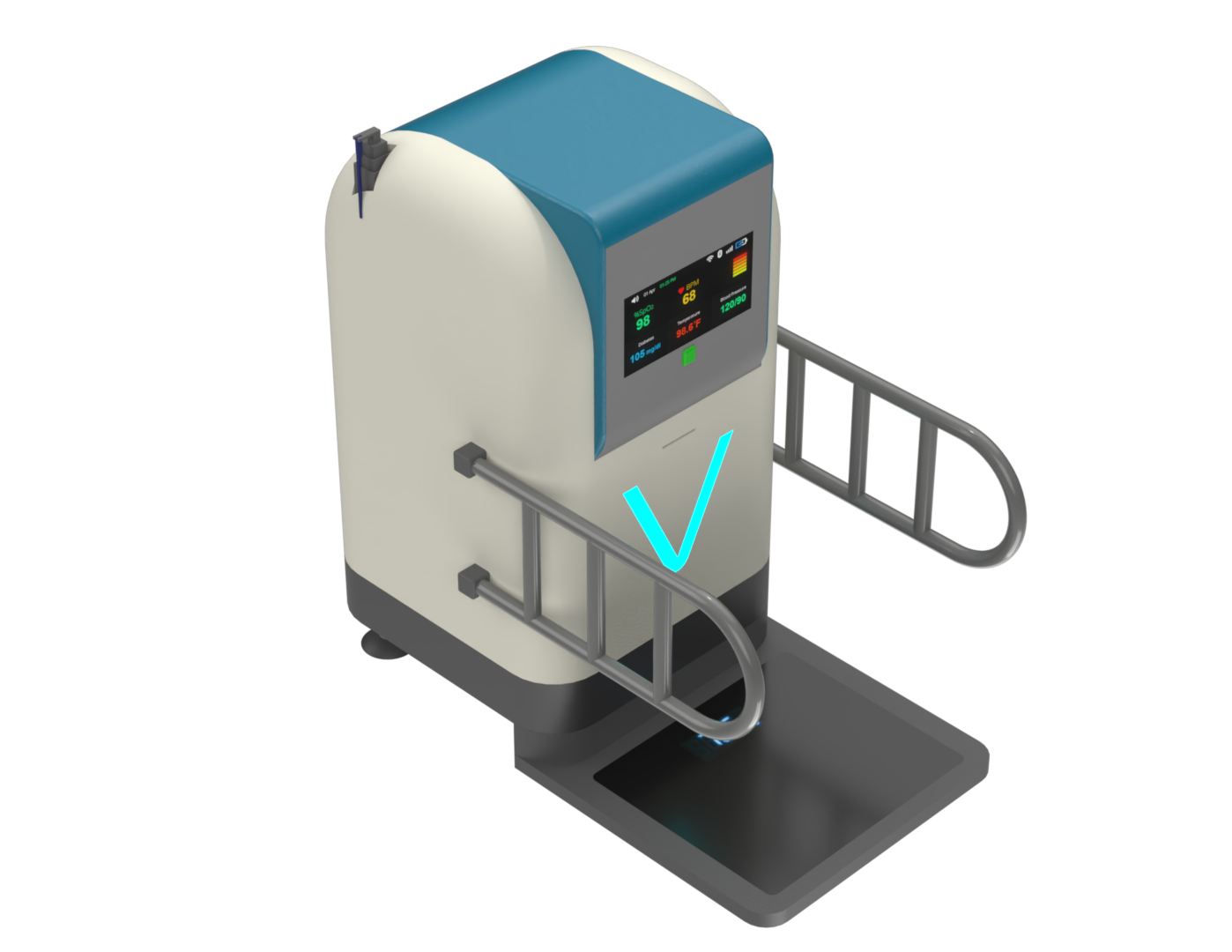
V-DOC combines medical sensors, patient communication, embedded computing, sample and medication compartments, navigation hardware, and deployment-specific software.
Medical features
- Heart rate and blood oxygen from pulse-oximeter sensors
- Blood pressure through an enclosed cuff system
- Infrared non-contact body temperature
- Breathing rate through smart spirometer integration
- Extendable weighing scale for seated patient access
- Height measurement through stadiometer and ultrasonic sensing
- Specimen deposit and insulated storage where sample collection is required
- Medication dispensing for prescribed dosage support
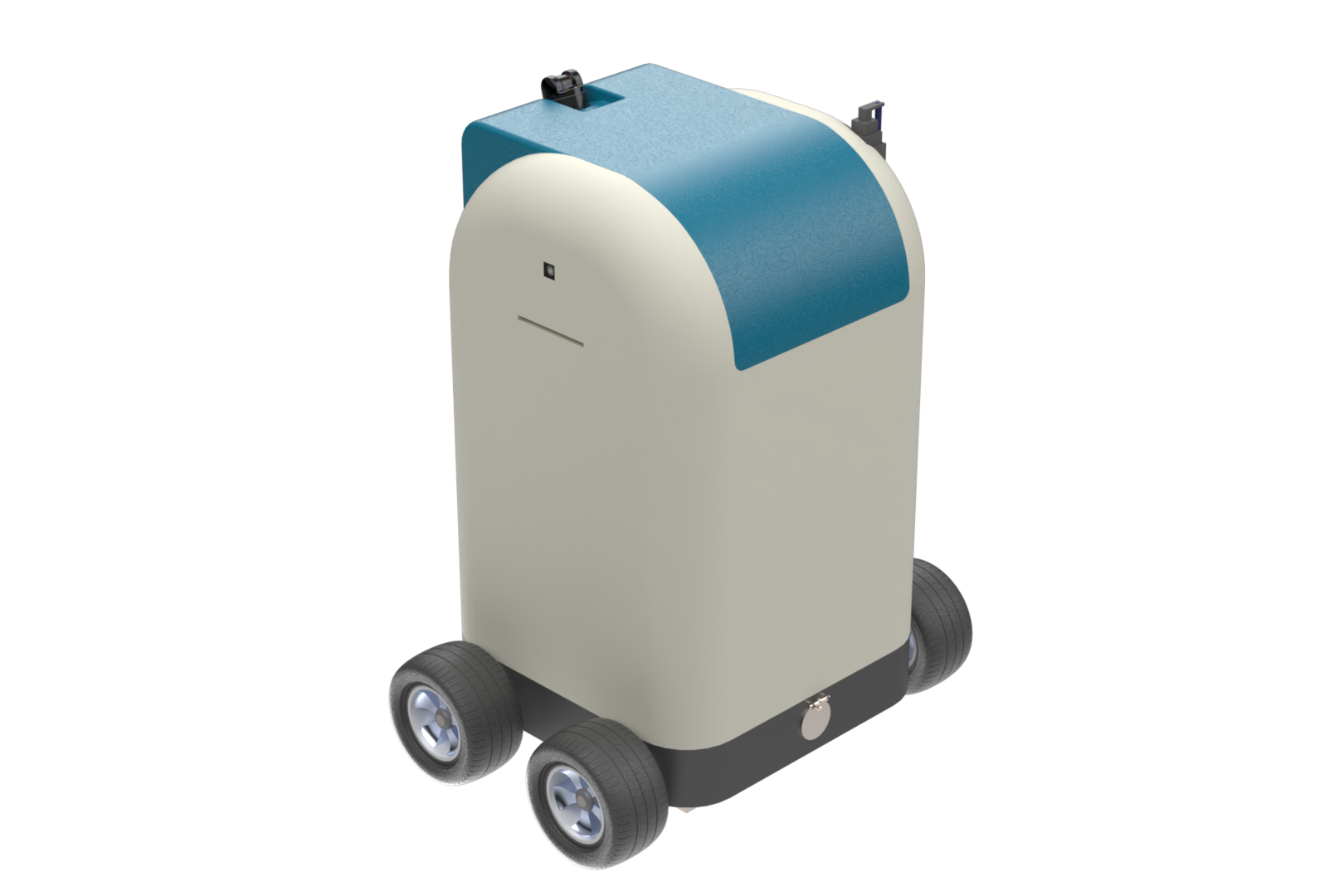
Autonomous navigation hardware
- Stereo cameras for long-range 3D recognition and mapping
- 2D LIDAR for real-time 360-degree obstacle detection
- HD color cameras for path recognition and backup perception
- 3D LIDAR or time-of-flight cameras for low-light and fine field-of-view mapping
- IMU for relative orientation and movement inside hospitals or mapped environments
- RTK GNSS and marked-road approaches for rural movement in the original B.A.R.M concept
Mobile vs Stationary
A mobile unit supports autonomous hospital movement. A stationary unit keeps core diagnostic abilities for fixed or manually positioned use.
Capability
Mobile V-DOC
Stationary V-DOC
Medical diagnostics
Full configured sensor suite
Same or core diagnostic suite
Movement
Autonomous hospital movement
Manually moved or fixed station
Navigation hardware
Stereo cameras, LIDAR, IMU, sensor fusion
No autonomous navigation package
Use case
Rounds, logistics, monitoring, triage support
Diagnostics and check-in point
Deployment model
Moves across mapped hospital environments
Works as a fixed or manually positioned unit