Rural system design

The Ecosystem

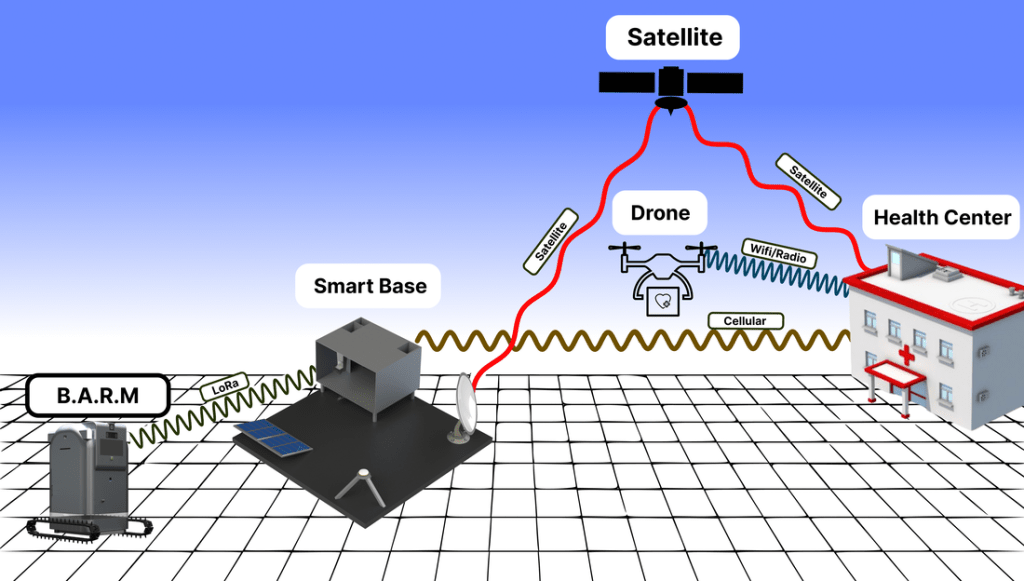
To enhance B.A.R.M's individual capabilities, the robot is integrated into an ecosystem consisting of B.A.R.M, the Smart Base, a Health Center, and a Transfer Drone.

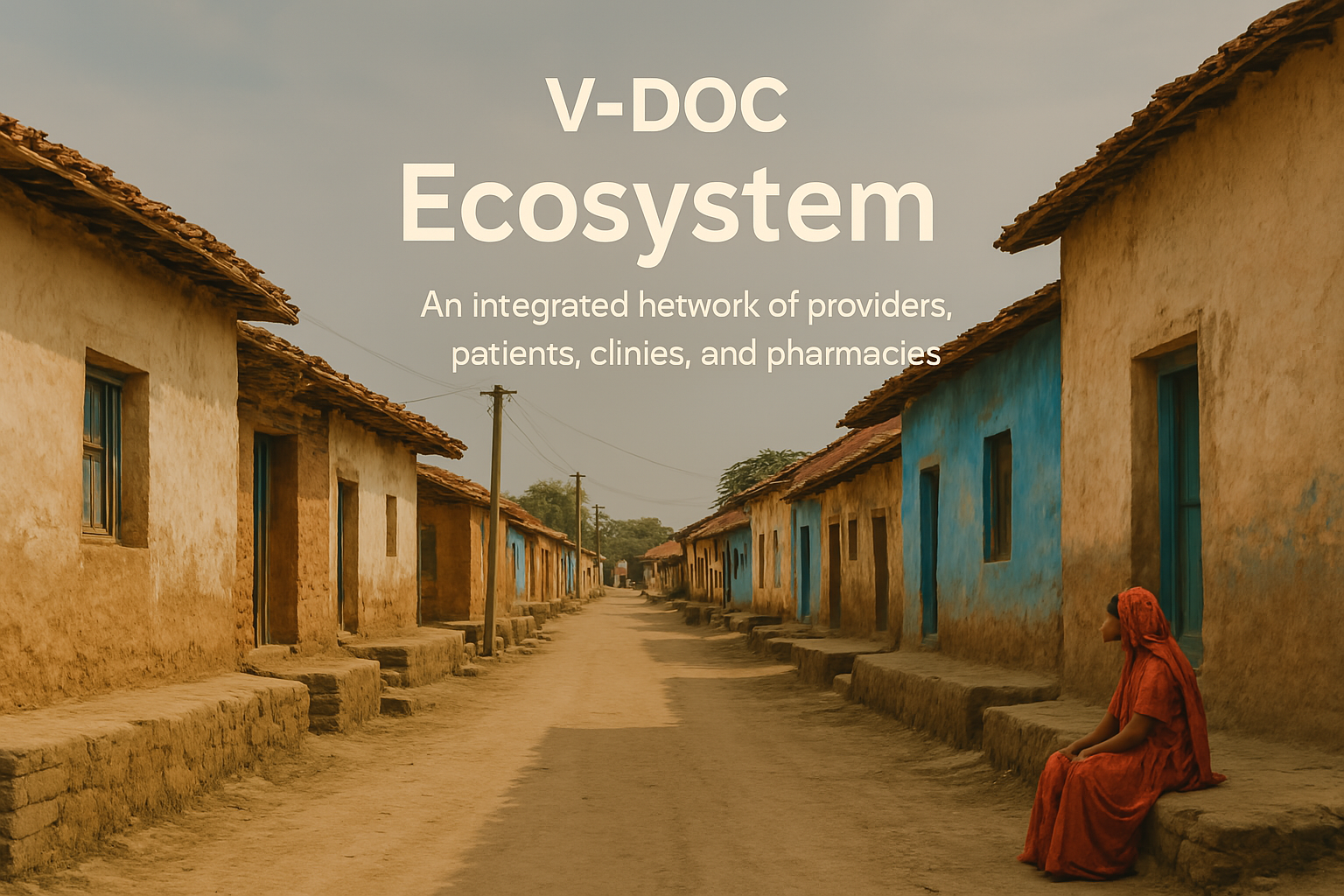
V-DOC ecosystem poster

Key terms

B.A.R.M

The autonomous medical robot that carries out medical checkups in rural areas.
Smart Base

The hub for drone interaction, refrigerated specimen storage, charging, RTK base, solar power, and communication.

Health Center

The closest health facility with blood and urine testing capabilities and qualified professional review.

Transfer Drone

The drone responsible for transferring specimens and medication between the health center and smart base.
What interactions take place?

Transfer of Specimen

  1. After collecting specimen samples, B.A.R.M informs the base to call the drone for pickup.
  2. B.A.R.M travels to the base and transfers specimens into the refrigerated unit.
  3. The drone collects the specimen and transports it to the health center.
  4. The health center tests the specimen and conveys results to qualified health professionals along with known readings such as high blood pressure or high body temperature.

Transfer of Medication

  1. A qualified health professional makes a diagnosis.
  2. Required medication is sent to the smart base via drone.
  3. B.A.R.M collects medication and dispenses it at the required interval.
  4. The drone can return disposables and medicinal packages to the health center for responsible disposal.

Communication System

  1. The Smart Base acts as the hub of communication systems.
  2. If cellular data is available, the system uses existing cellular infrastructure.
  3. In isolated communities, satellite communication links the base and health center.
  4. B.A.R.M communicates with the Smart Base through LoRa for multi-kilometer updates, SOS messages, and requirements.